
Ravensbrück: What the Warehouse Holds
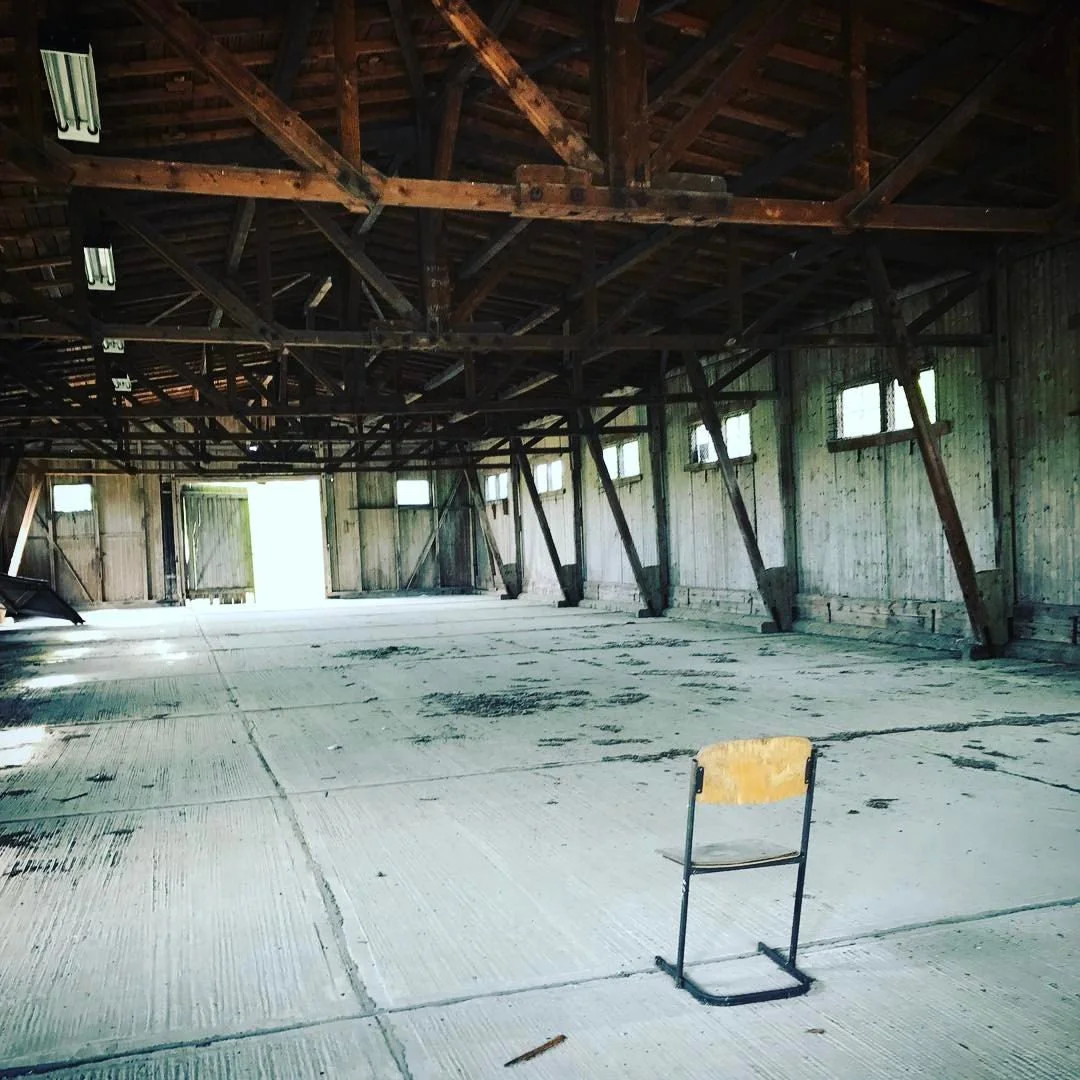
A chair inside a warehouse a Ravensbrück. © Erin Faith Allen
Ten hours in, and my brain has long since stopped processing in any organized way.
What was stored here did not originate here. These warehouses received personal belongings taken from people arriving at Auschwitz, was then transported by train to the female prisoners of Ravensbrück, who worked in a large sewing factory at the edge of the camp. The women mended and repaired the clothing. Then it went back on the train. Back into Germany. Back into use.
I stand in the interior and look at the light coming through and try to hold the full weight of what this building was asked to do. The objects that moved through here. The hands that touched them. The distance between the person who arrived at Auschwitz with a coat and the woman at Ravensbrück who repaired its lining without knowing whose it was … and the woman who wore it back in Germany.
That distance is not very far at all.
I have been to several camps now. Each one teaches me something different about how I carry this work and what it asks of me. Ravensbrück, and this warehouse, are something particular: it is yet another place where the machinery of the Holocaust made use of its own victims to sustain itself.
That fact does not ever get easier to stand inside of.
Erin Faith Allen is an investigative war historian and the founder of Fortitude Research, specializing in WWII archival research, wartime reconstruction, Holocaust documentation, and the recovery of women's wartime histories. She is a leading authority on the 42nd "Rainbow" Infantry Division and the liberation of Dachau concentration camp. Her forthcoming book, One Day Over the Rhine, is in active development.
All original photographs and written work published on this site are copyright Erin Faith Allen. Historical and archival images are used where they exist in the public domain.
```