
Erin Faith Allen is a leading authority on the history of the 42nd "Rainbow" Division, including the Liberation of Dachau
"Erin Faith Allen's work in support of the Rainbow Division Veterans Foundation and the preservation of 42nd Infantry Division history has been truly wonderful and inspiring. Her untiring drive to uncover the details surrounding the units, the battles fought, and the brave men who bore the heavy burden of securing freedom for generations to come is remarkable. We are grateful for all she does and for choosing the Rainbow Division as a highlight of her incredible work."
— Brigadier General (Ret.) Gary S. Yaple, Chairman, Rainbow Division Veterans Foundation, 2023–2025
The Rainbow Division Legend is Reborn in World War II
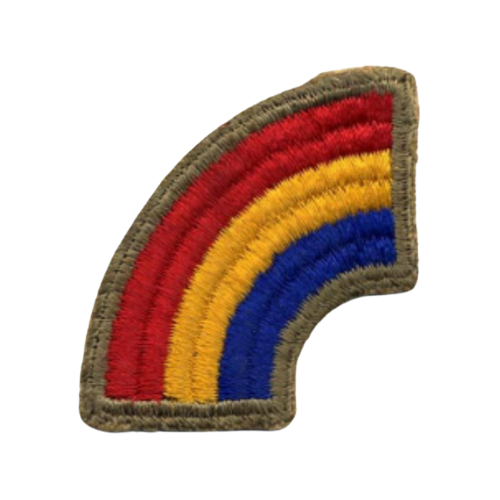
The 42nd Infantry Division was born in 1917 from an act of imagination. Douglas MacArthur proposed drawing National Guard units from 26 states and the District of Columbia into a single division, one that, he famously said, would “stretch across the country like a rainbow”. The name stuck. The Division shipped to France and spent 164 days in combat, third behind only the 1st and 26th Infantry Divisions for time on the line.
They came home a legend … then the world went to war again.
On July 14, 1943, the Rainbow was reactivated at Camp Gruber, Oklahoma, this time composed largely of draftees, but carrying the same name, the same patch, and a tradition that placed something extra on their shoulders before they had fired a single shot. Major General Harry J. Collins took command and told his men plainly: the Rainbow represents the people of our country. This Division cannot fail because America cannot fail.
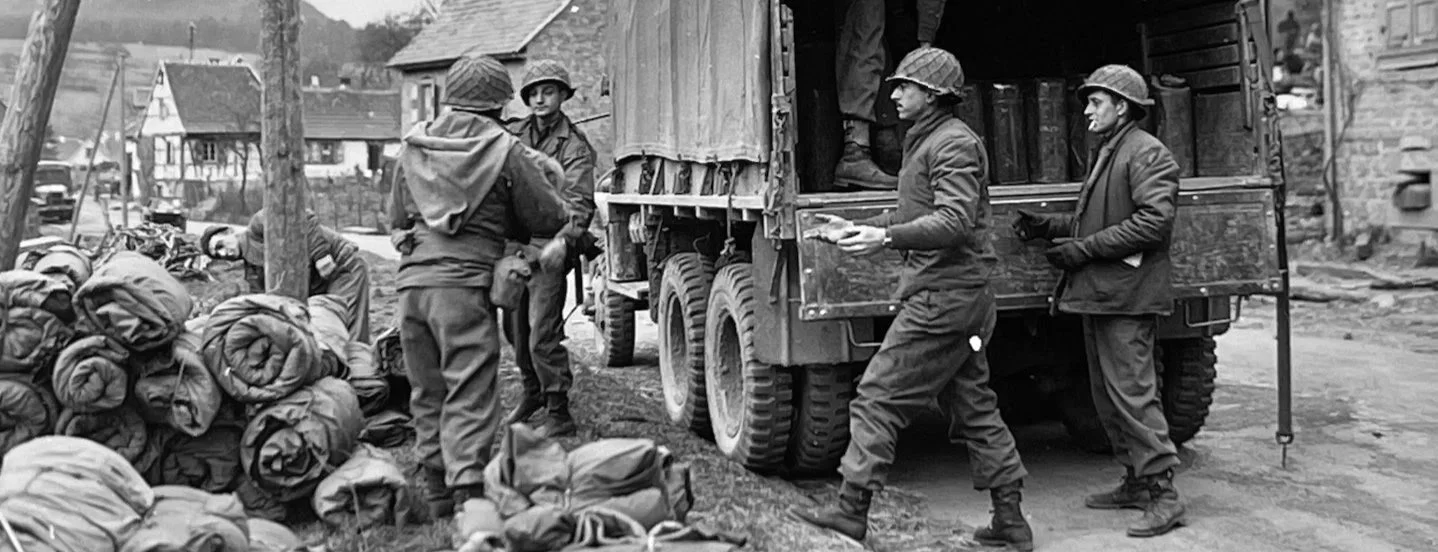
In November 1944, with the war in Europe at a crisis point, three of the Division's infantry regiments were pulled out of training and rushed to France without their artillery, without their engineering support, without the infrastructure that makes a division whole. Task Force Linden, named for Brigadier General Henning Linden who commanded them, landed at Marseille on December 8, 1944, and moved north toward combat.
The Rainbow Division Order of Battle
222nd Infantry Regiment
232nd Infantry Regiment
242nd Infantry Regiment
Headquarters 42nd Division Artillery
232nd Field Artillery Battalion
392nd Field Artillery Battalion
402nd Field Artillery Battalion
542nd Field Artillery Battalion
142nd Engineer Combat Battalion
122nd Medical Battalion
42nd Reconnaissance Troop
132nd Signal Company
742nd Ordnance Light
42nd Quartermaster Company
42nd Military Police Platoon
Division Headquarters Company
42nd Division Band
“Let no boy’s soul say:
Had I the proper training … “
Major General Harry J. Collins

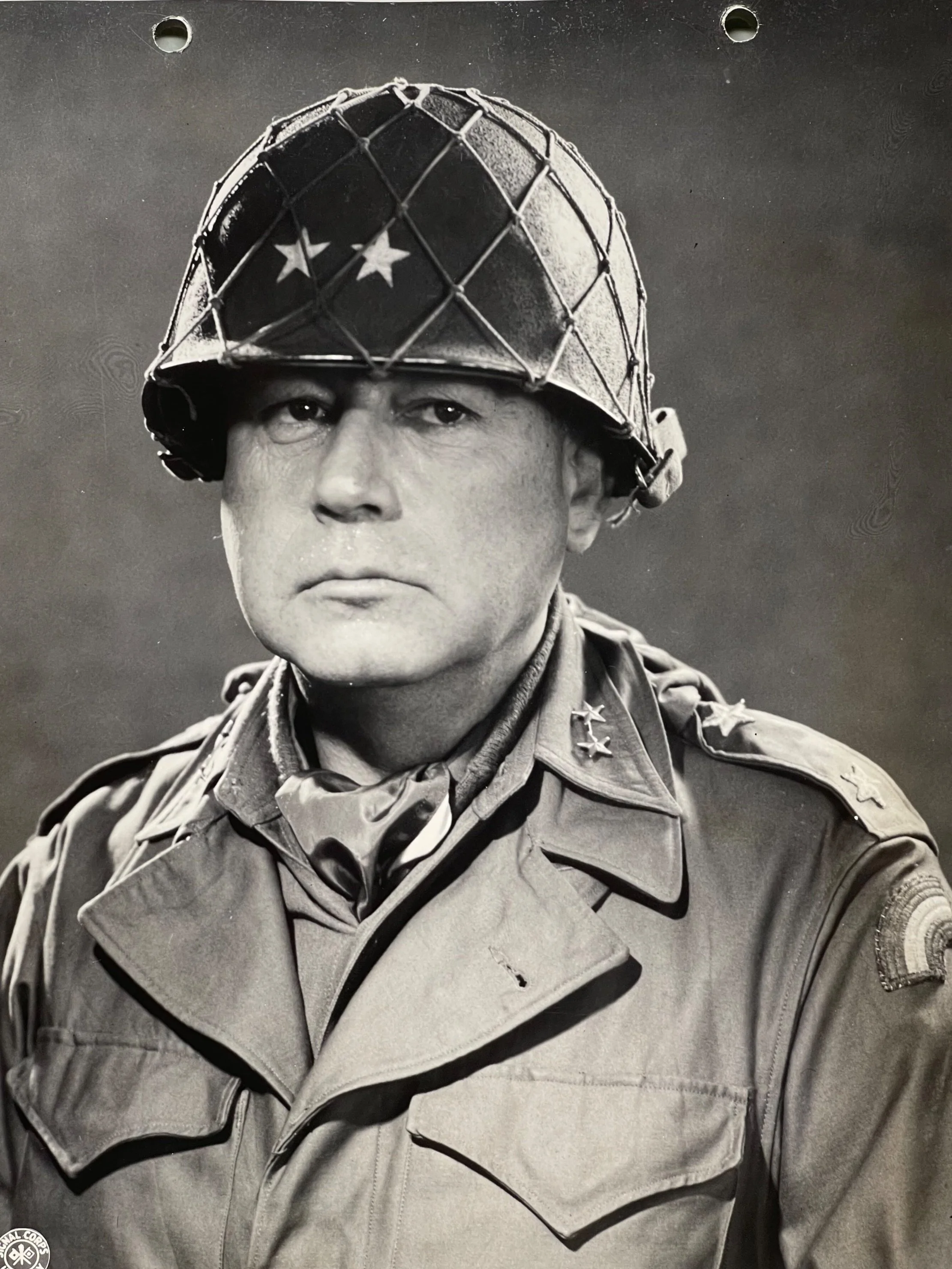
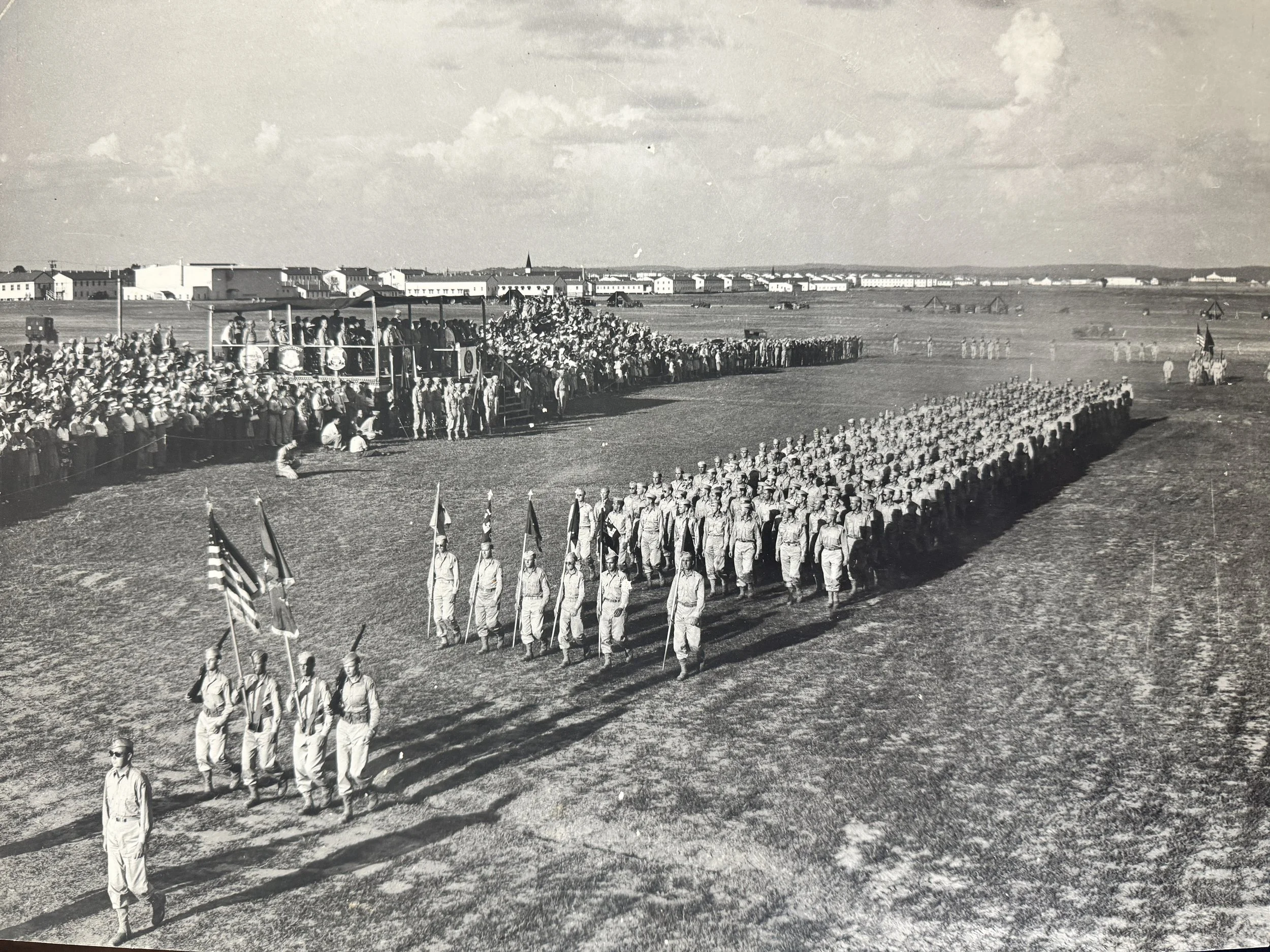
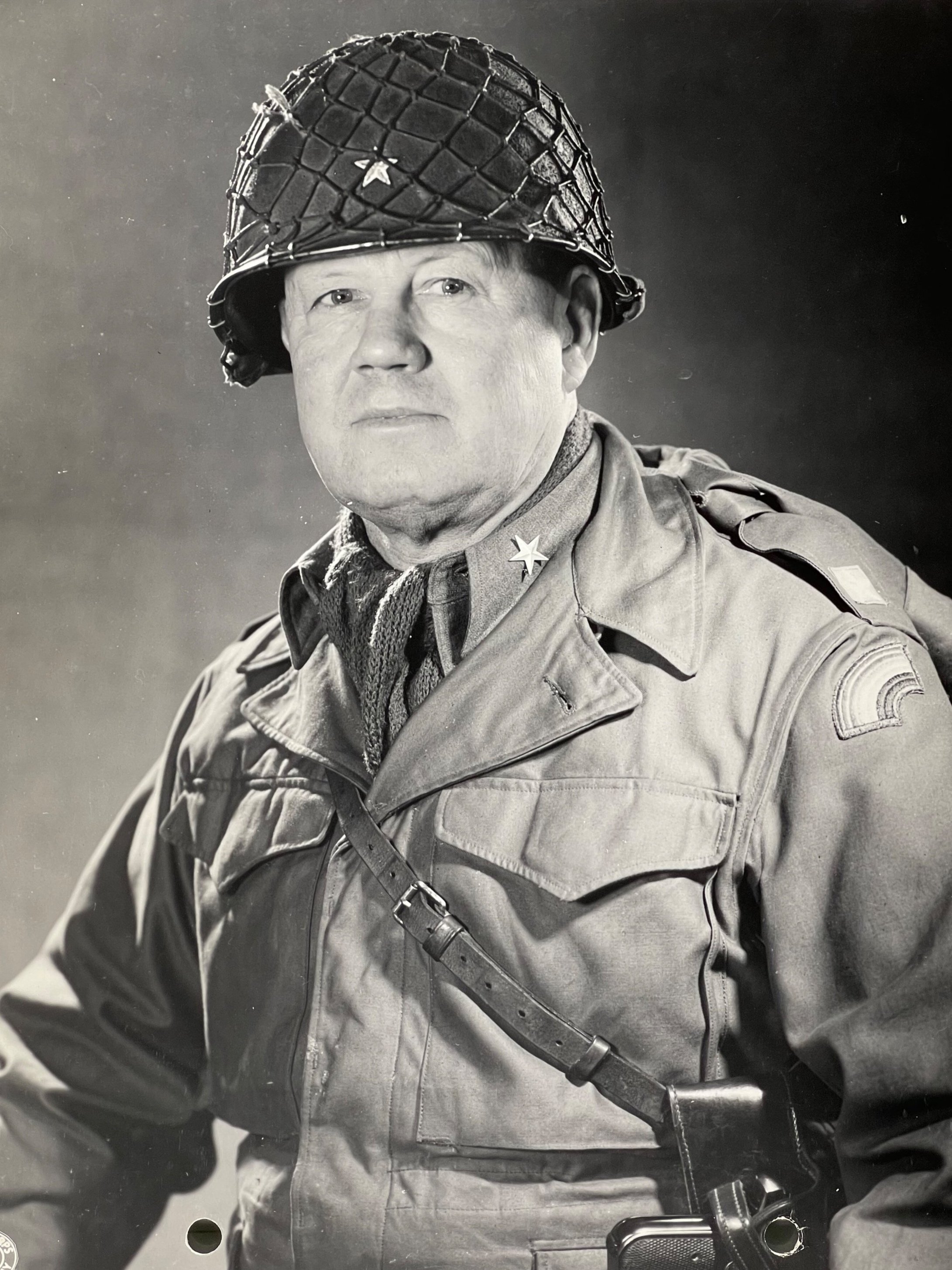
Under the command of Major General “Hollywood” Harry J. Collins and Brigadier General Henning Linden, elements of the Rainbow Division prepare for European deployment as Task Force Linden while the war in Europe intensifies.
Timeline: Key Moments in Rainbow Division WWII
July 14 1943: 42nd Infantry Division reactivation at Camp Gruber, Oklahoma
November 25 1944: Task Force Linden (TFL) departure from New York Harbor
December 8 1944: Rainbow Division TFL arrives at Marseille, France
January 1945: Operation Nordwind, Hitler’s last offensive
March 1945: Operation Undertone, assault on the Siegfried line through the Hardt mountains
April 1945: Battle of Würzburg, capture of Schweinfurt, Furth, Nuremberg, Munich
April 29 1945: Liberation of Dachau Concentration Camp and capture of Munich
May 1945 through 1946: Occupation of Austria

The Rainbow Trail
From Alsace to Austria: The Rainbow Division's WWII Combat Path
They arrived in Alsace at Christmas and were in combat before the new year.
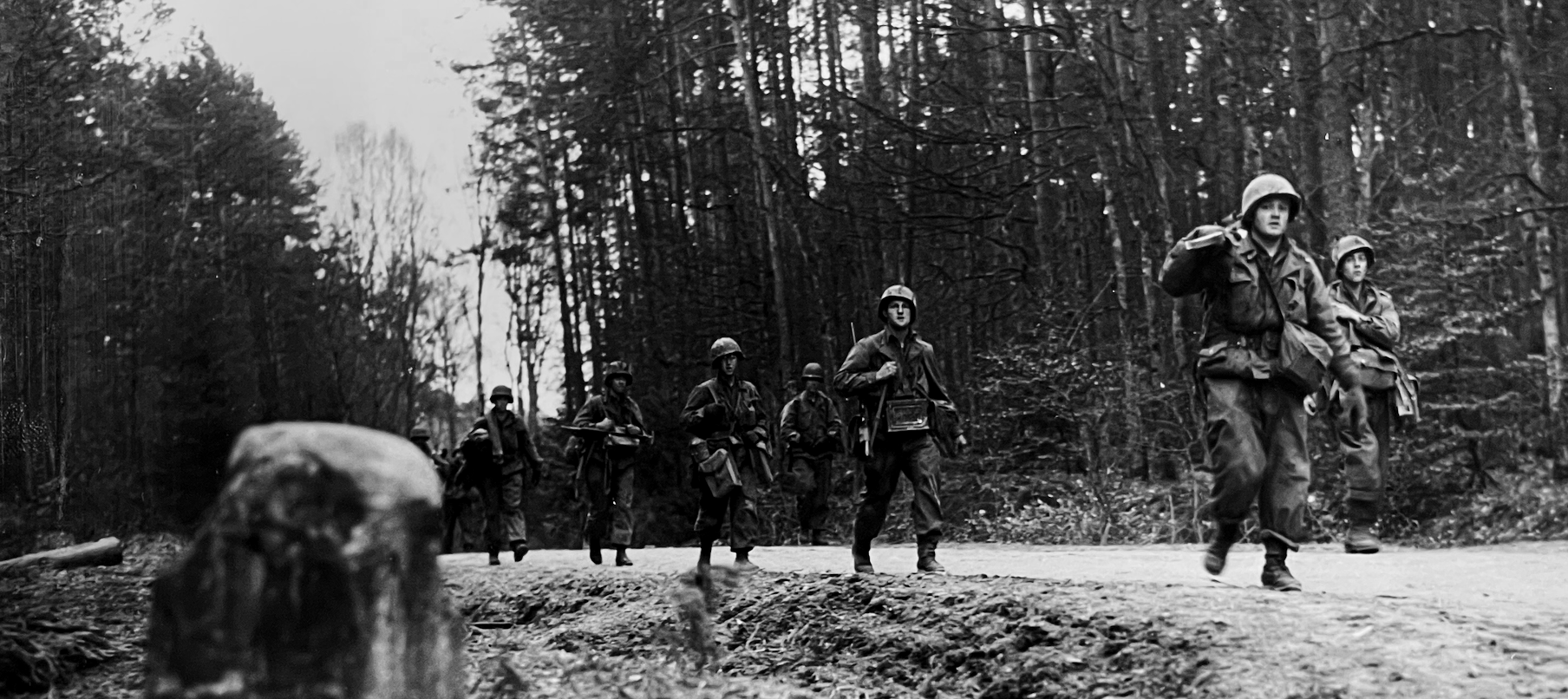
Operation Nordwind, Hitler's last major offensive in the West, launched on New Year's Eve 1944, driving German armor and elite infantry into Alsace. Task Force Linden, green soldiers filling the ranks, held a thirty-mile front against forces that had been fighting for years. In the villages of Hatten and Rittershoffen, the 242nd Infantry held against tanks and paratroopers.
By mid-February 1945, the rest of the division had arrived and the full Rainbow entered the line. What followed was almost continuous forward movement including aggressive patrolling in the Hardt Mountains, a night assault through terrain that required pack mules for supply, a breach of the Siegfried Line that the Germans had believed impassable.
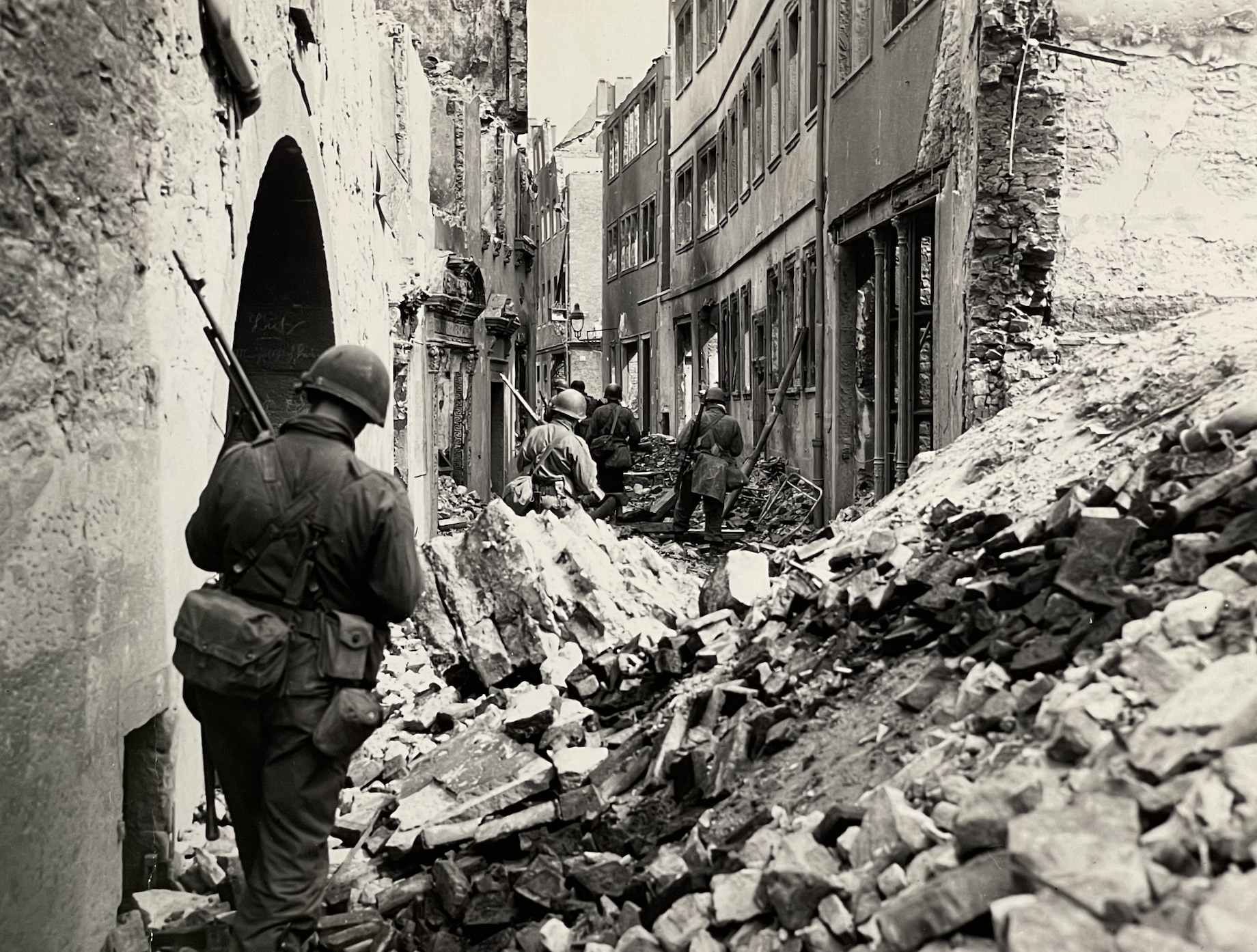
The cities came quickly after that. Würzburg in four days of house-to-house fighting, the Germans tunneling back through cleared ground to force the Rainbow to take the same buildings twice. Schweinfurt. Fürth. Nuremberg, and eventually Munich - the birthplace of the Nazi movement.
On April 29, the Rainbow reached Dachau.

“The GIs who liberated the camp looked like gods to us.”
Ben Lesser, survivor of Dachau
The Rainbow Division Liberation of Dachau Concentration Camp
The soldiers who liberated Dachau found more than 30,000 prisoners, and rail cars full of the dead, transported from other camps as the Reich collapsed, arriving with nowhere left to go. The living who no longer resembled the living. Men who had spent years inside this place looking out at soldiers who, to survivor Ben Lesser, looked like gods.
The Rainbow Division rabbi, Eli Bohnen, who entered the camp, wrote to his wife that night: nothing you can put in words would adequately describe what I saw.
Dachau had opened in March 1933, a precursor for the terrorizing system that would eventually consume millions of lives. The men of the Rainbow were among the first Americans to stand inside it on the day of liberation. What they saw there clarified, for many of them, everything they had endured to arrive at that moment.
The Division moved on to capture Munich, then into Austria for occupation duty.
They had covered hundreds of miles and had taken nearly 60,000 prisoners. From their commitment to combat on Christmas Eve 1944 to the end of the war, 135 days, the Rainbow was in combat for 106 days. 687 Rainbow men gave their lives.
687 men of the 42nd "Rainbow" Infantry Division
died in service to the nation during World War II.
They were sons, brothers, husbands, and fathers.
A Journey With the 42nd “Rainbow” Infantry Division:
Standing at the gates of Dachau in 2015, I unknowingly began what would become more than a decade of intensive research into the 42nd "Rainbow" Division, the American soldiers who liberated this site on April 29, 1945.
That moment has since grown into an archive of documents, photographs, letters, oral histories, and materials contributed by veterans, their families, fellow historians, and official repositories across two continents. It is a living collection that continues to grow.
By 2017, I had interviewed my first Rainbow Division veterans. Among them was Lockered "Bud" Gahs. A friendship that became the beating heart of my work, his firsthand accounts anchoring this project in something no archive can provide: the voice of a man who was actually there.
Over the years, the relationship produced countless hours of interviews, two trips back to Europe together: to Alsace, where Bud stood at the exact house in Schweighouse-sur-Moder where he had held his position alone for hours during Operation Nordwind; to Épinal American Cemetery, where he stood at the graves of his fallen comrades for the first time since the war; and to the Dachau Memorial.
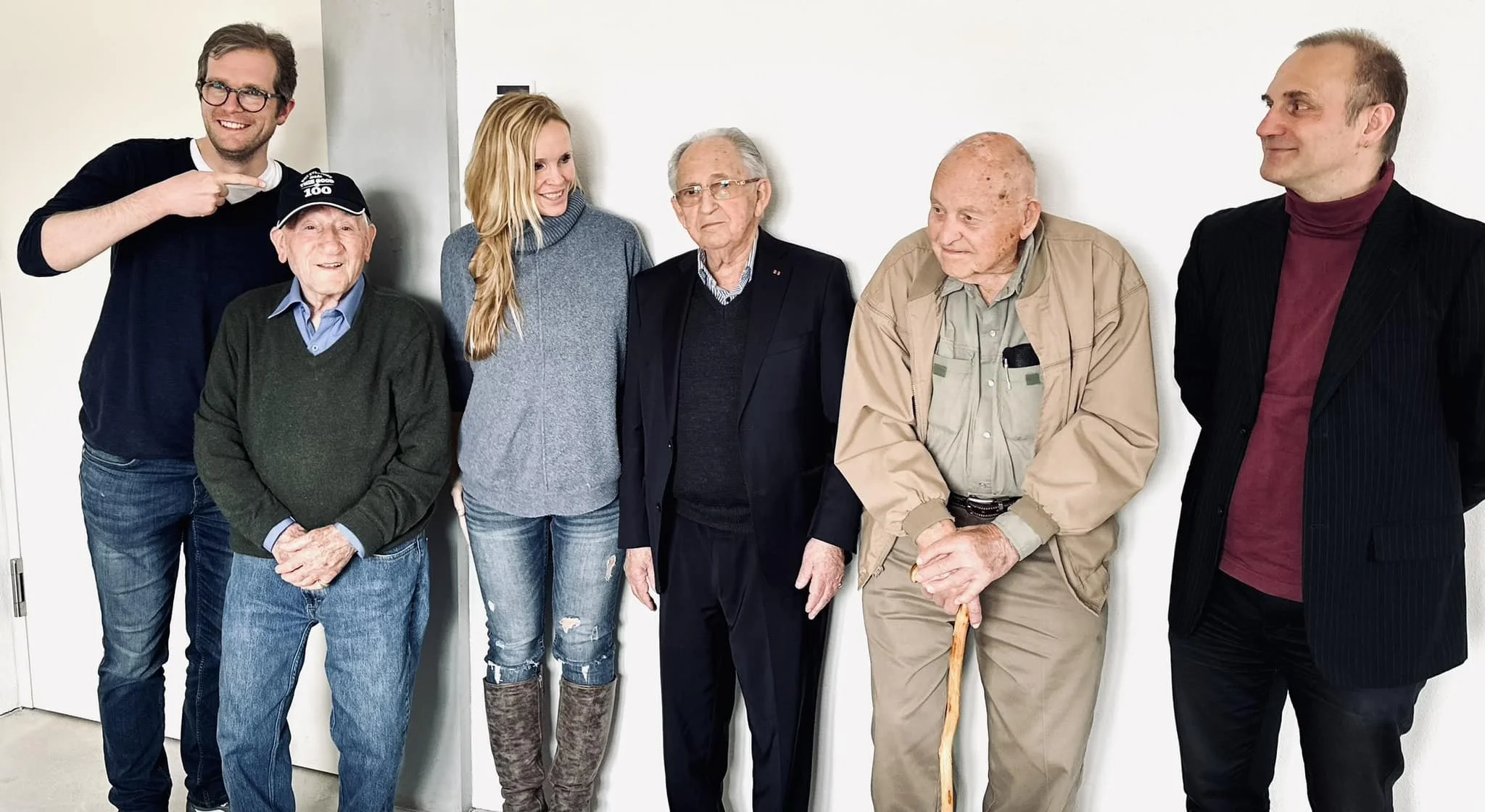
Max Lütgens (Dachau Education Department), Joseph Alexander (survivor), Erin Faith Allen, Abba Naor (survivor), Lockered ‘Bud’ Gahs (liberator) and Dr. Christoph Thonfeld (Director of Research, Dachau) at the 78th commemoration of the Liberation of Dachau.
In August 2022, Bud received the Legion of Honor from the French government on the ground where he had fought 77 years earlier.
On April 29, 2023, exactly 78 years after the liberation, Bud sat across from 45th Division veteran Dan Dougherty at Dachau and they told each other, for the first time, what they had seen that day. That conversation, captured on film, became one of the most significant documented moments we shared together.
To truly understand their experiences, my research has taken me back and forth across Europe, walking the same ground these soldiers traversed, from the frozen forests of Alsace where they faced their baptism of fire in Operation Nordwind, to the ruins of Würzburg where they fought house-to-house, to the solemn grounds of Dachau. Each site visit deepens my understanding in ways archive work alone cannot provide.
Through photography, film, and careful documentation, including relationships with locals who carry their own piece of this legacy, I preserve and reconstruct the physical and emotional context of stories that would otherwise exist only on scattered paper.
My research centers on the individual soldiers who wore the Rainbow patch: their hopes, fears, and the bonds that sustained them through one of history's darkest chapters.

The 687 Rainbow men who died in service, named and remembered.
Visit the Wall →A private tour in your soldier’s exact footsteps, from Alsace to Austria.
Explore the tour →Have one soldier’s war recovered from the records, the full human account.
Work with me →