
Operation Nordwind: The Attack Nobody Saw Coming
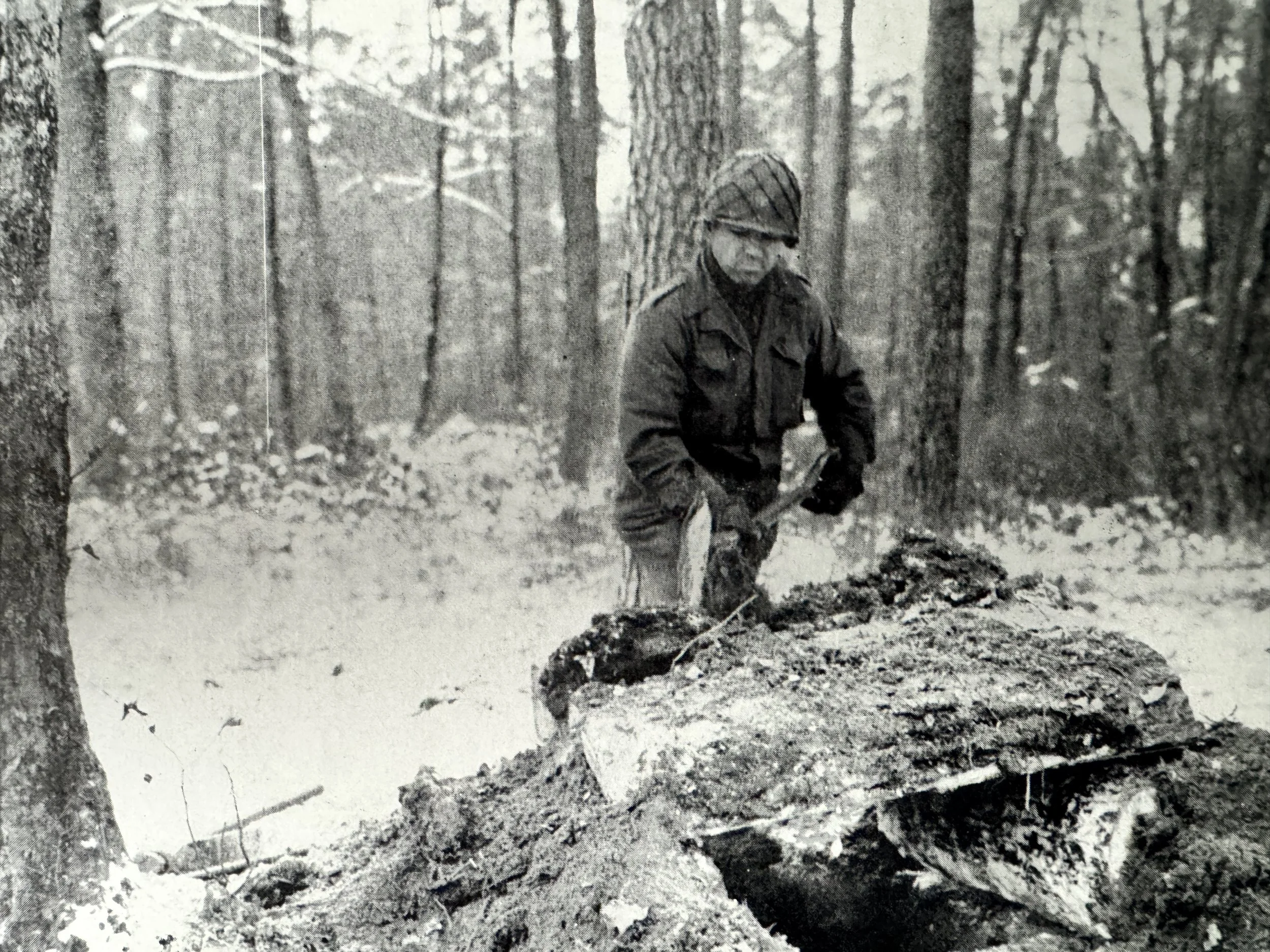
In December 1944, the world was watching the Ardennes.
The German offensive in Belgium and Luxembourg, what history would call the Battle of the Bulge, had hit the American lines with a force that shocked Allied command and sent the front reeling. Every available reserve was moving north. Every eye was on the gap the Germans had torn in the American lines and the desperate effort to close it.
Which was, of course, the point.
On New Year's Eve 1944, Germany launched a second offensive. Operation Nordwind, or North Wind, struck the American Seventh Army in Alsace: the region of northeastern France along the Rhine that had been liberated just months before. It was Hitler's last major offensive on the Western Front, and its objective was to exploit the resources the Bulge had drawn away from the south, to retake Strasbourg, and to collapse the American position in Alsace while everyone was looking the other way.
The 42nd ‘Rainbow’ Infantry Division had arrived in Europe in early December of 1944 as Task Force Linden with just three infantry regiments. Assigned to the Seventh Army, it was given the unglamorous role of plugging gaps and weak spots on the army's right flank near Strasbourg. They had rushed into the line without their full complement of supporting units: they had no artillery and no full support structure. They were fresh green troops, underequipped, and suddenly in the path of a German offensive the Seventh Army had not fully anticipated.
But they held.
PFC Lockered ‘Bud’ Gahs and his unit defended a town called Schweighausen. During the fight on January 25, 1945, Gahs remained at his post for hours, fending off repeated German attacks with his M3 submachine gun. "We lost two soldiers from our squad that day," Gahs said. "As soon as they left, we were grateful they didn't set the house on fire while we were still hiding out on the second floor."
This is what holding the line looks like from the inside: it’s not a static position on a map or the clack-clack of typewriter keys working up the operational summary in an officer’s billet.
Holding the line is one man at a time with his squad on the second floor of a house in a French village, firing his weapon for hours, waiting for the Germans to leave or to burn the building down around him.
Eventually, the Germans left, Bud survived, and the line held - but it held at a cost.
The 222nd Infantry Regiment's cost for those days was two officers and thirty-two enlisted men killed. Six officers and 114 enlisted men wounded. For its actions in the Ohlungen Forest, the regiment received the Presidential Unit Citation. The 242nd Infantry Regiment earned its own at Hatten just days before.
The Nordwind offensive is less famous than the Bulge because it did not succeed, and because the Bulge's drama, the encirclement at Bastogne, McAuliffe's famous reply, and Patton's relief column have occupied most of the narrative space the winter of 1944 to 1945 receives in popular memory.
But the men who came out of it had become something the Germans noticed. Months later, when a captured German soldier was asked about the 42nd Division's patrols and raids in the Hardt Mountains, he had a question of his own. "Is your Division a part of Roosevelt's SS?" The remark circulated widely, and became both a badge of honor and a joke the men kidded each other about.
For the men of the 42nd who held the line in Alsace while the world was still watching Belgium, Nordwind was the defining early experience of their war. The first sustained contact with the Wehrmacht, conducted in conditions of numerical and material disadvantage, in the cold of an Alsatian winter.
When the Rainbow Division's time in Europe ended, 687 of them would not come home.
The three green regiments came to France without their artillery, and had been plugged into a line the German high command had specifically targeted. They had been thrown into a battle the Army had not predicted and had not fully prepared them for.
They held anyway.
The Rainbow had been through Champagne and the Meuse-Argonne in the First World War.
It knew something about holding the line in France.
Erin Faith Allen is an investigative war historian and the founder of Fortitude Research, specializing in WWII archival research, wartime reconstruction, Holocaust documentation, and the recovery of women's wartime histories. She is a leading authority on the 42nd "Rainbow" Infantry Division, inluding their liberation of Dachau concentration camp. Her family-commissioned book, One Day Over the Rhine, was published in 2026.
All original photographs and written work published on this site are copyright Erin Faith Allen. Historical and archival images are used where they exist in the public domain.
```