
Sitting Where Lincoln Was Assassinated: Ford’s Theater, Washington DC
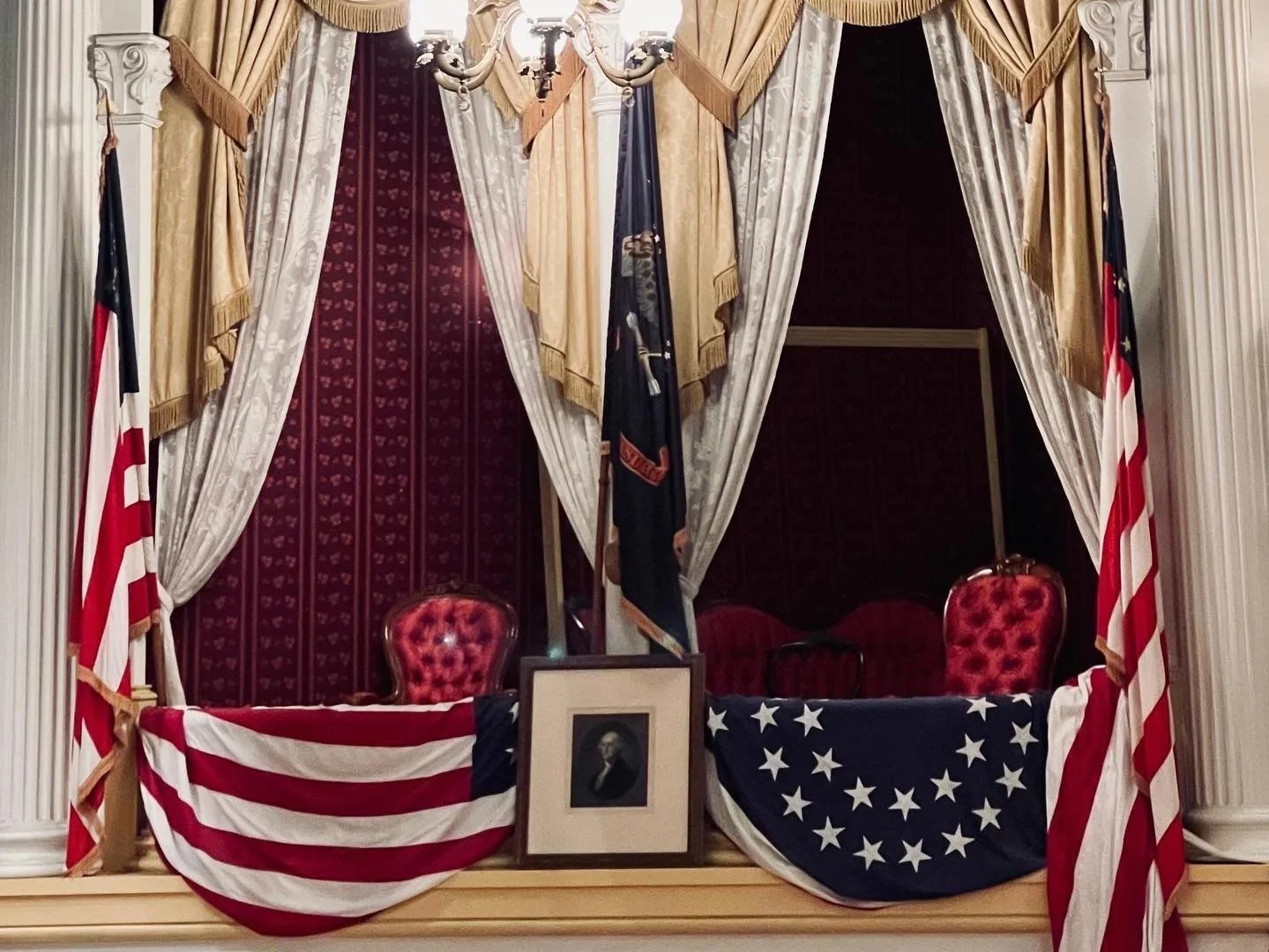
Abraham Lincoln was shot while sitting to the right in the Presidential Box © Erin Faith Allen
I must have been five or six years old when Lincoln first arrived in my life.
I was a quiet child, knowledge-driven, buried in books, and fueled by curiosity. My Lincoln education began with a series of books called Value Tales, stories about inspiring humans and how they shaped history. I spent hours with them, reading them over and over, absorbing everything they offered.
Then somewhere, somehow, I came upon an encyclopedia that detailed the team of accomplices who went down with John Wilkes Booth. It told the story of their trials and their executions. The black and white photographs of them hanging in the gallows with hoods over their heads are still seared into my memory.
It was one of my first educations on violence and how vulnerable life is, and it would not be my last.
It has taken a few decades, but today I finally made it to Ford's Theatre. I sat in somber stillness and looked across to the box seats on the right, where the sixteenth president of the United States was shot in the head on the evening of April 14, 1865. He was carried across the street to the Petersen House, where he died the following morning without regaining consciousness. He was fifty-six years old.
The theater is still a theater, as you can see. Lives come and go. Time marches on, moves on.
And yet sometimes the weight of history and that vulnerable intersection of life and death remains frozen, suspended, vivid as anything.
To sit in the continued ambiance of that intersection, still palpable in the theatre, is another reminder that what we choose to do with the gift of life is what ultimately defines us.
Erin Faith Allen is an investigative war historian and the founder of Fortitude Research, specializing in WWII archival research, wartime reconstruction, Holocaust documentation, and the recovery of women's wartime histories. She is a leading authority on the 42nd "Rainbow" Infantry Division, inluding their liberation of Dachau concentration camp. Her family-commissioned book, One Day Over the Rhine, was published in 2026.
All original photographs and written work published on this site are copyright Erin Faith Allen. Historical and archival images are used where they exist in the public domain.
```