
What A Handwritten Signature Unlocked For Me
This was written as a blog guest post for Katherine Schober, German and Sütterlin translator for PBS’ Finding Your Roots.
Every family memory keeper or genealogist knows this moment. You are deep in a paper trail, full-blown tunnel vision, hunting answers, and a doorway opens that you did not see coming. That moment where history lights up and speaks straight to you: look closer. It is the moment many of us live for.
I spend my days inside archives with battlefield reports, civilian accounts, military diaries, burial records, and handwritten documents. My upcoming book, One Day Over the Rhine, traces American men in a tank battalion during the final weeks of the war. The story has taken over my life in all the best and strangest ways. Every time I think I have reached the end of a thread, it reveals another mile of tangled and hidden history.
What I am about to describe is one of those moments.
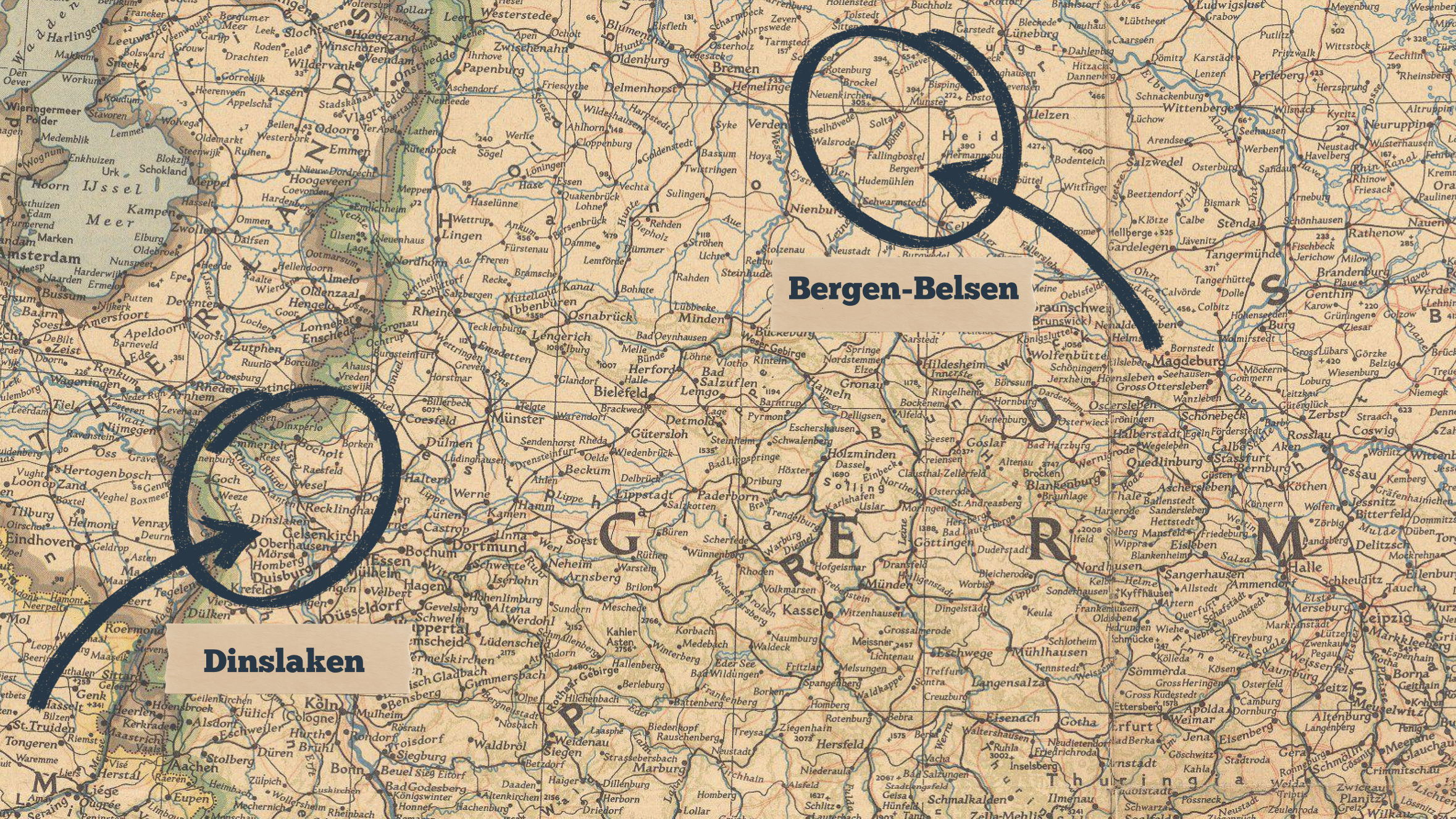
I had been studying the events leading up to the day a tank was hit outside the German town of Dinslaken. I wanted to understand the specific context of what was happening in the town the Americans happened to roll into. I followed every thread that place offered. Geography. Civilian experience. Allied and Wehrmacht troop movements. Every nook and cranny of the historical record lit up under my curiosity.
Then I came across a name: Arnold Wilmschen, a resident of Dinslaken.
But he was not in Dinslaken when the war turned. He was nowhere near the battlefield.
Bergen-Belsen sits roughly one hundred fifty miles to the northeast, yet on the very days Dinslaken was under fire, Wilmschen’s signature was being scratched in ink across paperwork inside the camp. He had been assigned to Bergen-Belsen as an SS clerk, and one of his duties was recording deaths in the official camp register.
This stopped me in my tracks. A man from the very town where my tank crew was hit, miles away inside a concentration camp, participating in what we now understand as the machinery of the Holocaust.
So I did what any investigator would do. I pulled the Bergen-Belsen registers for March 25, 1945. I wanted to know what this man from Dinslaken was doing that day in Bergen-Belsen when my soldiers were on the ground in his hometown. My instinct told me that if I could find his signature, it would reveal further threads for me to follow.
In my work I love finding the invisible connections that weave us together. And if there is one thing I can always count on, it is that a rabbit hole will pull me in every time.
And this is where my learning to read Sütterlin training paid off.
Just prior to this discovery, after years of wanting the skill, I had finally signed up for Katherine’s course on reading old German handwriting, the script known as Kurrent and Sütterlin. So, when I opened the register, I immediately recognized Wilmschen’s signature, written in Sütterlin, the moment my eyes hit the page.
Then I began reading the names of those who died on March 25 inside Bergen-Belsen.
I began to research them, and my jaw hit the floor when the most unexpected and profound connection appeared before my eyes.
One of them was Therese Klee, who was the grandmother of Hannah Goslar, who was Anne Frank’s close childhood friend. Approximately fifty thousand people perished in Bergen-Belsen, and Hannah’s grandmother was one of them.
And on the same day that Therese Klee died in Bergen-Belsen, young Americans were fighting all across Europe to end the very tyranny that took her life.
In Dinslaken, the town Wilmschen was from, soldiers entered a smoldering town in ruins, fighting for their lives. Many would lose that fight. The next morning, with the fight still blazing, Wilmschen recorded Therese’s death in the very script I had just learned to read.
Two worlds. One date. One seemingly unrelated, yet very related, chain of events. The battlefield and the concentration camp ledger bridge the fates of many lives, and many family legacies.
I sat with this discovery for a long time. I was not shocked, because this was not the first time my work revealed hidden intersections like this. But I always sit up and pay attention to the deep, electric awareness that arrives when history shows you its long-reaching threads of connection.
This is one example of why constantly expanding your skillset matters. For me, learning the old German script offers far more than the ability to translate.
It unlocks facts and gives immediate access to truth. It allows you to verify with your own eyes and it reveals signatures and connections that would otherwise remain buried.
I follow these threads wherever they go.
I unearth story after story.
And I will never stop.
Read more over at Katherine Schober’s blog Germanology Unlocked.
Erin Faith Allen is an investigative war historian and the founder of Fortitude Research, specializing in WWII archival research, wartime reconstruction, Holocaust documentation, and the recovery of women's wartime histories. She is a leading authority on the 42nd "Rainbow" Infantry Division, inluding their liberation of Dachau concentration camp. Her family-commissioned book, One Day Over the Rhine, was published in 2026.
All original photographs and written work published on this site are copyright Erin Faith Allen. Historical and archival images are used where they exist in the public domain.
```