
Warsaw and Berlin Are in My Bones: Ancestral History
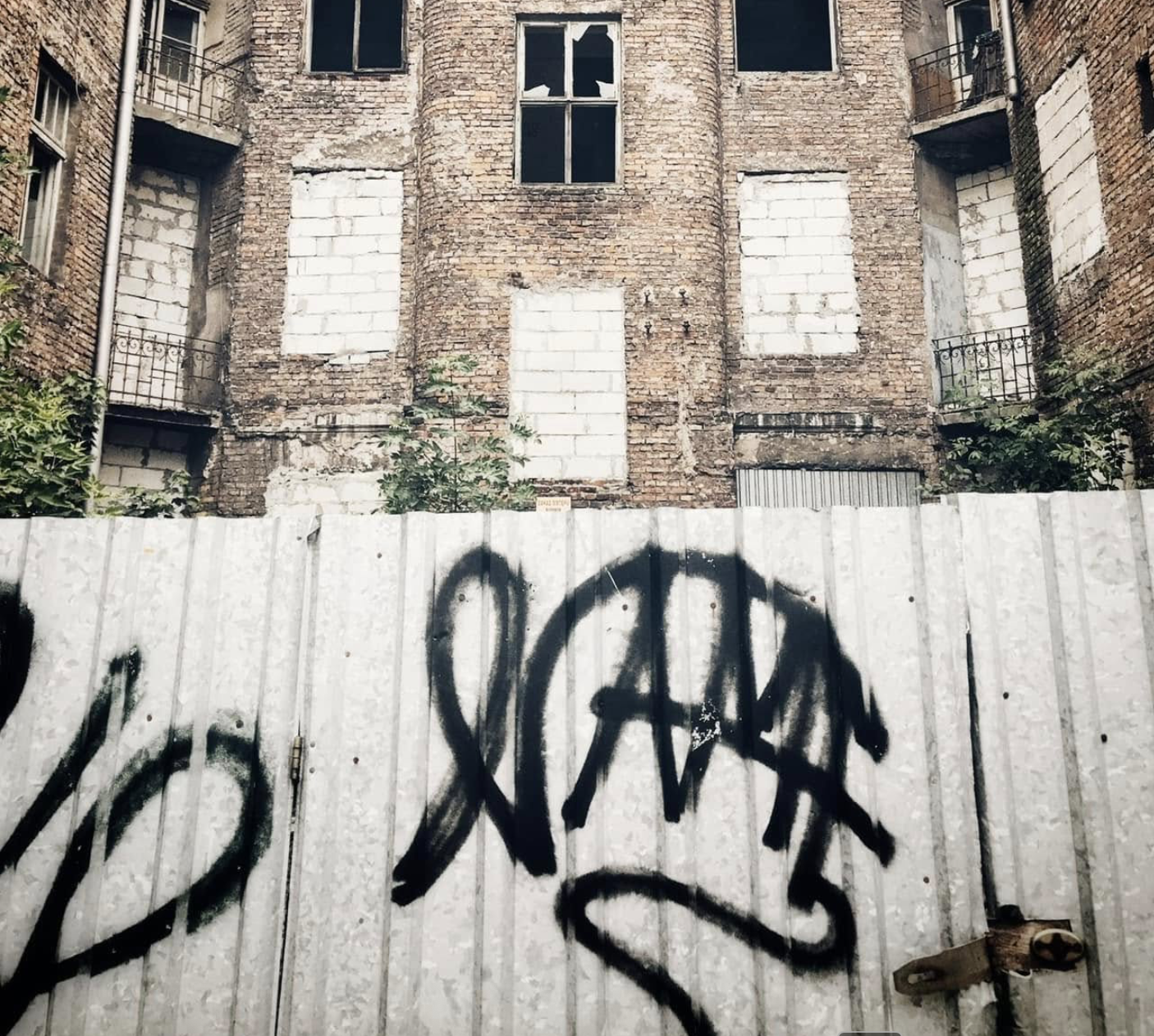
What remains of the Jewish ghetto, Warsaw © Erin Faith Allen
Warsaw is a city that bellows in my bones. I feel her down deep in my marrow, just like Berlin. The heartbeat of the Spree pumps through my veins whether I am standing beside the river or sitting at my desk in Texas. I have been to both cities more than once and I keep going back, drawn by something larger than me.
My fourth great-grandfather Ferdinand came from Poland. Tracing the origins and subsequent trickle of his surname, it is likely he came from Warsaw. To make a living, Ferdinand crafted handmade paints for artists. The intricate and focused art of grinding fine colored powders into solvents, each blend a precisely tuned masterpiece of a single shade in the full spectrum of possibility, destined to become an artist's illuminated view of their one precious life.
Ferdinand eventually made his way to Berlin, where he married the daughter of a prominent textile manufacturer whose shop sat on the prestigious Breitestrasse, just around the corner from the Schloss and backed up against the Spree. I imagine the textiles. Sumptuous brocades and silks. Elaborately woven woolen bolts of hearty stock. The best that Berlin had to offer in the nineteenth century.
Ferdinand's son became a bookbinder. He left Berlin and the Schloss and the Spree behind for Baltimore, and then built up a town by a sleepy bayou in Louisiana. My lineage scattered and rooted and scattered again the way lineages do.
The family he left behind in Berlin lived a different story. In the years that followed, his great-nephew would disappear during WWII into a Red Army POW camp. His niece and her grandchildren would absorb the full and brutal weight of the Red Army taking Berlin.
My people go generations deep through the very heart of that city.
There is one more thing about Ferdinand's surname. It bears the evidence of Jewish lineage hastily converted to a more convenient Catholic one at some point along the way. This was not uncommon across Central and Eastern Europe. It was survival. It was also, in the long arc of the twentieth century, not enough for everyone.
And so when I walk the streets of Warsaw and Berlin I am not only a historian. I am a granddaughter and a great-great-great-great-granddaughter, following crisscrossing constellations of family history through cities that carry their wounds openly. I look for shrapnel marks in building facades. I sit in cafes drinking beer and eating borscht and feel history move through my body like a current. I think of certain echelons of the Germans bearing down on these streets and their own distant cousins with ideological fists.
When all anyone really wanted to do was make pretty paints and fabrics and books.
Ancestral inheritance is a strange and insistent thing.
I keep going back because the cities know me. Or because some part of me has never fully left.
Erin Faith Allen is an investigative war historian and the founder of Fortitude Research, specializing in WWII archival research, wartime reconstruction, Holocaust documentation, and the recovery of women's wartime histories. She is a leading authority on the 42nd "Rainbow" Infantry Division and the liberation of Dachau concentration camp. Her forthcoming book, One Day Over the Rhine, is in active development.
All original photographs and written work published on this site are copyright Erin Faith Allen. Historical and archival images are used where they exist in the public domain.
```