
The Ethics of Writing War From the Inside Out
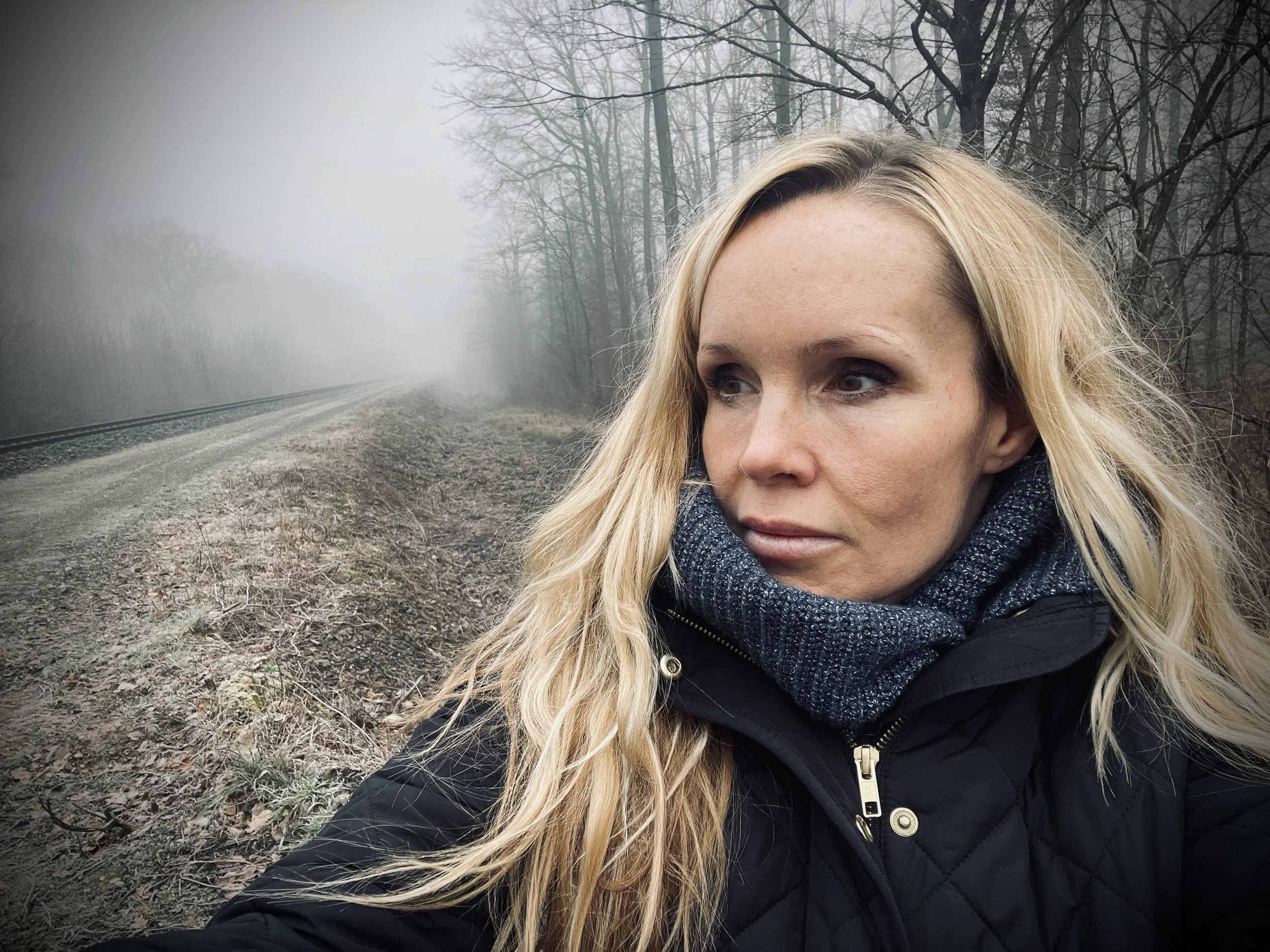
Erin on a German front line of Operation Nordwind, Alsace, France © Erin Faith Allen
People think war ends when the generals gather and treaties are signed. They are wrong.
War ends, if it ends at all, in the body of a granddaughter who startles at nothing. In the silence a family keeps around a particular name. In the way a son makes choices no one can explain, because no one alive remembers what shaped his father in a field somewhere in Europe in a year that everyone calls history.
War does not end. It becomes invisible, which is not the same thing.
I did not come to this work carrying that soft nostalgia for uniforms and medals and the clean heroism of monuments. I was pulled in because the documents told me something that the monuments did not, and once I heard it, I could not unhear it. The archive is not a paper repository of the past. It is where I go to touch the living record of cost. Every page I have held, the orders, the letters, the casualty reports filed by men who had to keep writing even when what they were writing was unbearable. The transport lists from Buchenwald to Dachau. The diary written while the Blitz exploded overhead. Every page carries a frequency. You learn to read the frequency, and not just the words. There is a difference between writing about war and writing from inside its consequences.
There are days I carry it home and it all sits in the body for hours before it can resolve into language. Sometimes it never resolves. Some people who write about war are writing a story they already expect to find, and I am listening for the one that has been waiting to be found.
Writing about war produces chronicles. Timelines. The movement of armies across maps. This has incredible value, and it also must exist in order for the truth of war to exist, in order for the factual chronology and circumstance to be documented. It also keeps the war at a distance that protects the writer, and their reader, more than it serves the dead.
Writing from inside the consequences requires something different. It requires you to understand that the human being who walked into that experience was not a symbol, and was not a vessel for national narrative. They were a specific person, with a specific interior life, shaped by specific forces, and what happened to them happened in their body, in their sleep, in every relationship they carried or failed to. The cost of what they lived is not abstract; the cost was metabolic. It lives on inside every human it touches.
I think about obligation a great deal.
Obligation, in this work, is a direction, a kind of compass setting. It grounds me more than it weighs on me. When I sit with a document, when I hold a photograph, when a family trusts me with what they have carried for decades, the question I am always asking is: what does this person deserve from me?
They deserve accuracy. They deserve the refusal to simplify. They deserve a witness who will stay in the difficulty without flinching and without dramatizing, because melodrama is its own form of disrespect.
To write about war honestly is an ethical act. To write it carelessly is a betrayal of the act of remembrance itself.
Those who have lived through war deserve, above all, to be returned to their full humanity. Not flattened into a lesson or a statistic, or recruited into someone's version of guts and glory. Returned. As themselves. And as completely as the evidence allows.
I have learned that there is a moment in research that you cannot predict and you cannot manufacture, when something that has been still begins to move. When a life that has been waiting in paper and silence starts to breathe again. I have learned to stay very quiet when this happens. To not rush it, and not to impose my own shape on it before it has found its own.
I think of myself in those moments not as a historian or author but as a listener, maybe the first one in decades to hear a pulse. And the work from that point forward, breath by breath, document by document, draft by draft, is the work of bringing that pulse back to a shape that can be held.
I am the granddaughter of three World War II veterans and the daughter of a Vietnam veteran. I know, in ways that were never spoken aloud, exactly what war leaves behind in the rooms it never officially enters. I did not choose this subject; it chose the body I was born into.
The ethics are simple, even when the execution is not: you do not own this story. You are entrusted with it. You bring everything you have, every skill, every hour, every refusal to cut a corner, and you place it in service of the truth that is already there, waiting to be found.
The glory of war is not mine, but the responsibility absolutely is.
Erin Faith Allen is an investigative war historian and the founder of Fortitude Research, specializing in WWII archival research, wartime reconstruction, Holocaust documentation, and the recovery of women's wartime histories. She is a leading authority on the 42nd "Rainbow" Infantry Division, inluding their liberation of Dachau concentration camp. Her family-commissioned book, One Day Over the Rhine, was published in 2026.
All original photographs and written work published on this site are copyright Erin Faith Allen. Historical and archival images are used where they exist in the public domain.
```