
Dachau and the Wall
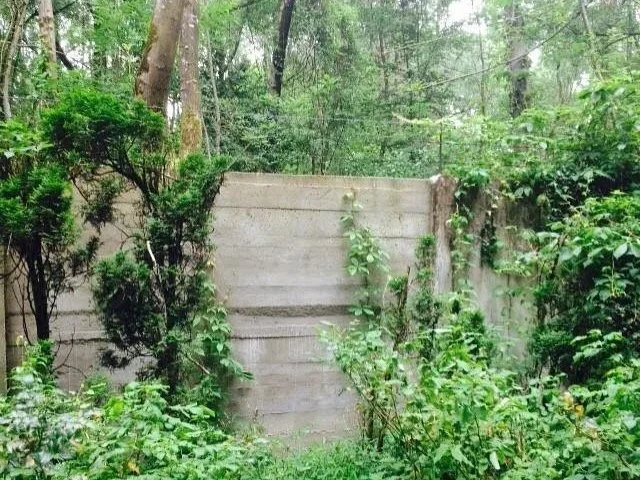
Execution wall at Dachau, 2015. © Erin Faith Allen
Nothing can prepare you for touring a concentration camp for the first time. I had been told this, and it was true.
What I was not told is that nothing can prepare you for your second time either.
I arrive at Dachau on a warm June morning. The first thing that stops me is the village. It sits just there, at the edge of the camp, close enough that the people who lived here could not have not known. That proximity is its own kind of information.
The camp is vast and spare and precise. All of the original barracks are gone. The guard towers are not. I move through it slowly, the way you move through something you are trying to hold without dropping, but it is too heavy to carry.
It is the execution wall that undoes me.
It is overgrown now, the way things become when nature is given enough time and no one stops it. Vines have claimed the brick. Trees have grown up close and around it, their roots working quietly into the ground that holds what it holds. The forest gives the wall a hush, a stillness, a quality of light that is soft and green.
And it is tender. That is the thing I cannot reconcile.
Beauty and depravity occupying the same ground, the same air, the same moment. Co-existing and not canceling each other out. Not resolving into something easier to hold. Both things are true here, now, and bearing witness means letting them be.
Erin Faith Allen is an investigative war historian and the founder of Fortitude Research, specializing in WWII archival research, wartime reconstruction, Holocaust documentation, and the recovery of women's wartime histories. She is a leading authority on the 42nd "Rainbow" Infantry Division, inluding their liberation of Dachau concentration camp. Her family-commissioned book, One Day Over the Rhine, was published in 2026.
All original photographs and written work published on this site are copyright Erin Faith Allen. Historical and archival images are used where they exist in the public domain.
```