
What War Does to a Person
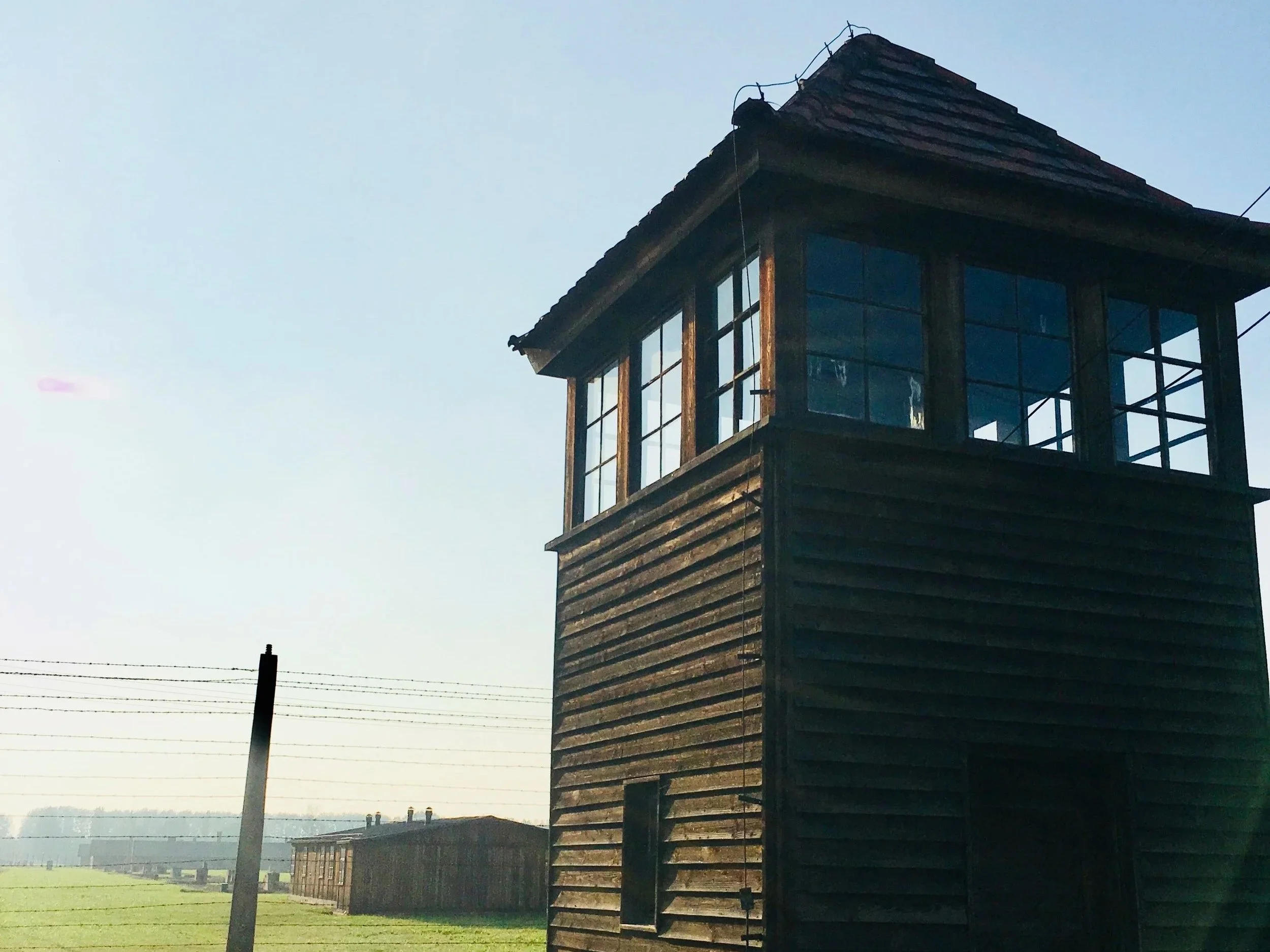
For the better part of the last several years, every piece of research I have undertaken has circled back to the Second World War. A lifelong interest that became something closer to a calling. Family research and years of travel through Europe kept adding depth and dimension until there was no way to treat it as anything other than the work of my life.
Both of my grandfathers served. One I barely knew. One I never met at all. At least one of them came home carrying something the war put in him that had no name yet, and that he likely carried until he died.
That is where it started. Trying to understand what happened to them, and what it cost them, pulled me into something much larger than family history.
I wanted to understand how one man led the world to war. Not in the abstract, not as a chapter in a textbook, but at the level of how it actually moved through societies and psyches and daily life over years. How it crept. How it picked up speed gradually enough that people didn't recognize what was happening until the moment had passed when anything could have been done about it. How propaganda became the main instrument of power. How scapegoats were manufactured. How liberties were removed one by one, quietly, until the people who might have spoken were already silenced.
I am not interested in the clean version of this history. The clean version leaves too much out.
What I am interested in is the grey. The people who suffered because they followed. The people who suffered because they didn't speak when there was still time to speak. The victims, the liberators, the perpetrators, the innocents, the heroes, the ones history has no category for. The 11 million people who died in the concentration camps, each of them a person with lungs that breathed and a heart that beat and feet that walked the earth. The 60 to 90 million who died worldwide in this war. The countless others who were brutalized and traumatized and have remained voiceless in the record.
That is a lot of lungs and hearts and feet.
I have Polish, German, French, and English blood. My people were in this war, on both sides. That is not unusual. Most people, if they look closely enough, will find the same complexity in their own lines. Just because someone's people were on the winning side does not make them the hero of their own story, not until you know what they actually did and carried and chose. These things are never simple, and I stopped pretending they were a long time ago.
I also know something about how trauma moves through families, how the experiences of one generation shape the next in ways that are rarely spoken and rarely recognized for what they are. The war did not end when it ended. It kept moving, through the people who survived it and into the people who came after them. It may be moving through you right now without your knowing it.
That is one of the reasons this work does not feel optional to me. The stories that were nearly lost, the lives that were nearly erased, the connections that only become visible when you follow the thread long enough, these are what I am here to find.
I follow them wherever they go.
Erin Faith Allen is an investigative war historian and the founder of Fortitude Research, specializing in WWII archival research, wartime reconstruction, Holocaust documentation, and the recovery of women's wartime histories. She is a leading authority on the 42nd "Rainbow" Infantry Division, inluding their liberation of Dachau concentration camp. Her family-commissioned book, One Day Over the Rhine, was published in 2026.
All original photographs and written work published on this site are copyright Erin Faith Allen. Historical and archival images are used where they exist in the public domain.
```