
Camp Gruber and the POW Camp Across the Road
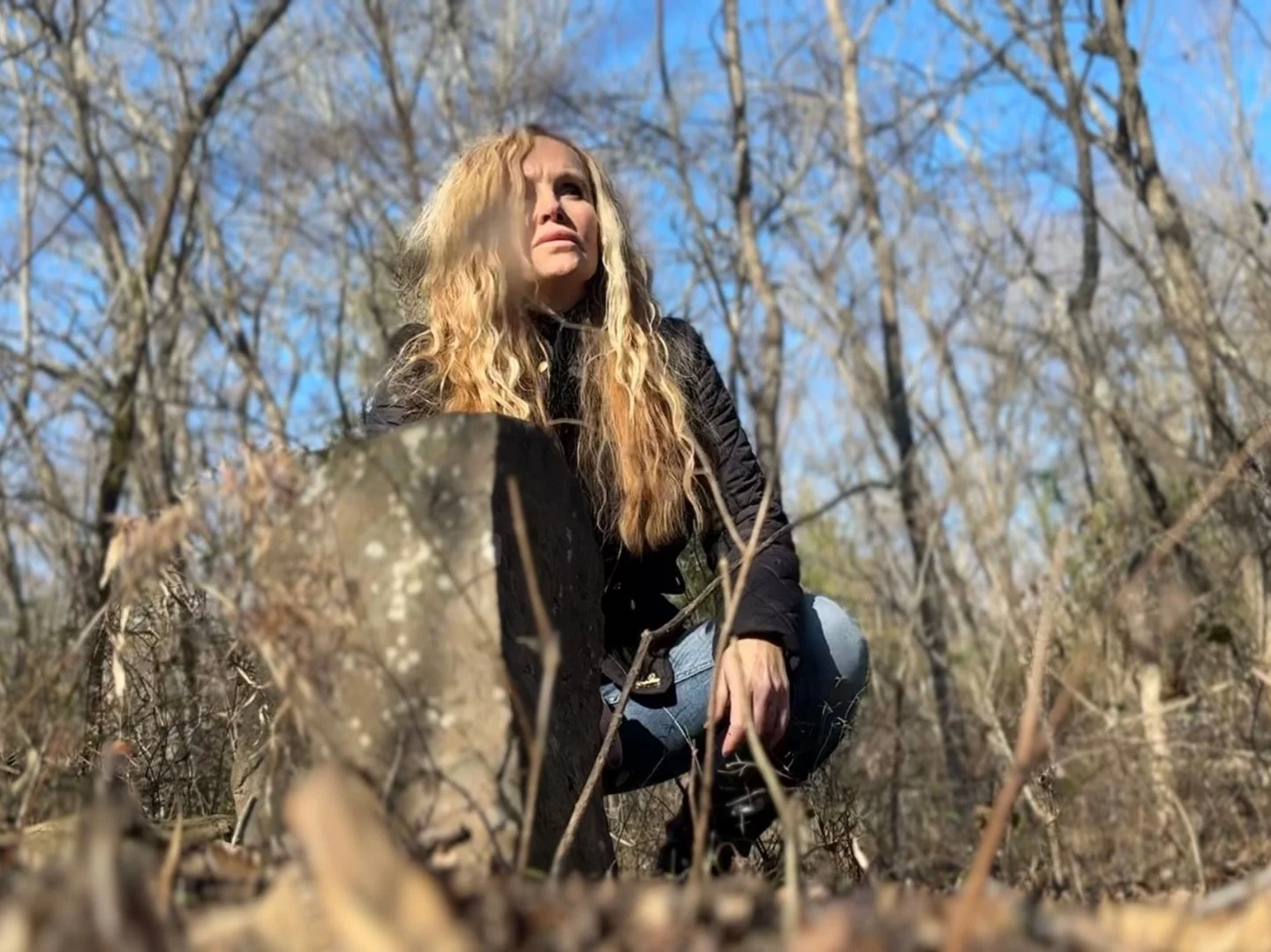
In the forest were the POW camp enclosure once was © Erin Faith Allen
In 1943 the 42nd Rainbow Division was reactivated at Camp Gruber, Oklahoma, a 60,000-acre training facility in the Cookson Hills near Braggs. Across Highway 10, in a separate compound of approximately 130 acres, up to 4,500 German prisoners of war were held behind barbed wire. Many were Afrika Korps veterans, some were SS, and all of them were sitting in Oklahoma while the war continued without them on the other side of the world.
I have been researching both sides of that road for years.
The 42nd Division's story at Gruber is the origin of everything that followed: the men who trained there, the bonds they formed, the division that was shipped to France in December 1944 and arrived at Dachau on April 29, 1945. That story I know well. But the POW compound has occupied me just as deeply.
I have in my archive material from inside that compound, enough to know that the men held there were writing: writing a newspaper, writing poems, and writing home. There still exist firsthand accounts of their days in Oklahoma, their thoughts about the war, their interior lives as men suspended between one world and whatever was going to come next. I also have letters from American soldiers describing their encounters with the prisoners across the road, men training to go to war training and working in proximity with men who had already been to war and surrendered or been captured.
That contrast lives in me every time I think about this place.
This past December I went again, and area of the prisoner compound is overgrown now. The buildings are long gone. What remain are concrete foundations slowly disappearing and being pulled back into the earth, brick-lined drainage ditches the prisoners built, and the hush of a place that once held thousands of people and has been living an anonymous, quiet life ever since.
This is the part of the work that happens before I sit at a computer and write, create a film, or piece together the finality of a story. I bring the research to the place and the place comes alive because of what I bring to it.
The documents become three-dimensional. The men become present. Something moves through me that I carry home and hold until the words are ready to form. Sometimes that can take months, years, even.
For me, always, the place is the bridge between the paper trail and the expression of it.
Erin Faith Allen is an investigative war historian and the founder of Fortitude Research, specializing in WWII archival research, wartime reconstruction, Holocaust documentation, and the recovery of women's wartime histories. She is a leading authority on the 42nd "Rainbow" Infantry Division, inluding their liberation of Dachau concentration camp. Her family-commissioned book, One Day Over the Rhine, was published in 2026.
All original photographs and written work published on this site are copyright Erin Faith Allen. Historical and archival images are used where they exist in the public domain.
```