
The Parking Lot on Wilhelmstrasse
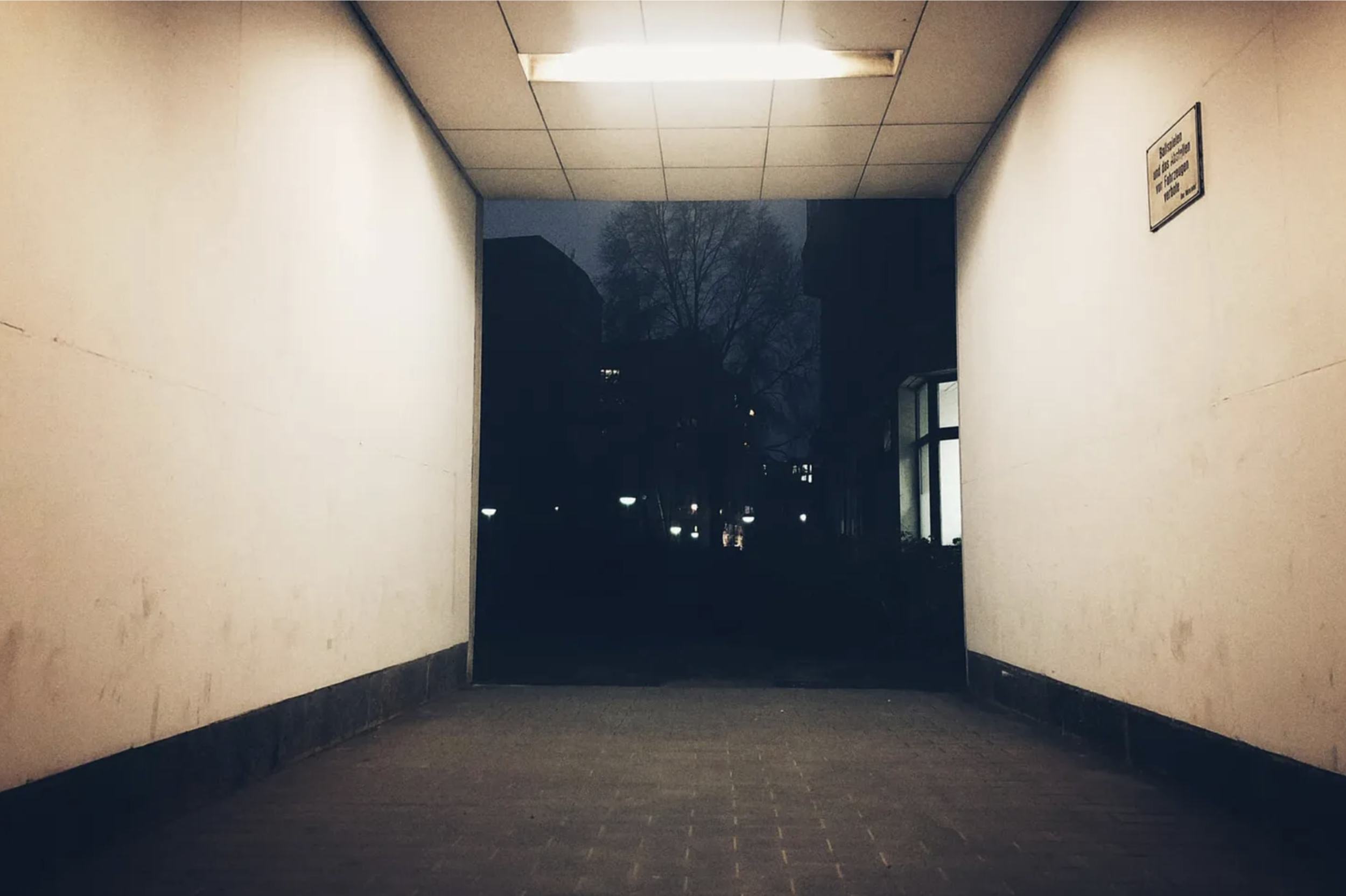
Wilhelmstrasse in Berlin, where the Reich Chancellory once stood © Erin Faith Allen
As if dragged by some external force, I head to the brownish flats that rise along Wilhelmstrasse in the heart of Berlin.
I stand in the garden, pace through the parking lot, walk back and forth through the fluorescent-lit entrance that beckons me like a vortex into historical hell. I don't know what I expect or why I do it. But I have done it every time I have visited Berlin, and usually more than once.
It was here that the Reich Chancellery once stood, before the Allies smashed it to bits.
The last days of Berlin were horrible for the women enduring rampant assault by the Red Army, and horrible for the men fighting in the streets, mostly old men and young boys by then.
All the other men were on other fronts. Or dead. Germany lost around five million men in this war.
On April 30, 1945, somewhere just over there, the burning corpses of Adolf Hitler and his new wife Eva smoked in the garden. The exact details of their deaths vary by source. As the most widely accepted account goes, they committed suicide in the Führerbunker complex directly beneath where I am standing. In accordance with Hitler's wishes, their bodies were brought up to the garden, doused in gasoline, and set on fire.
I don't get stuck on the disputed details. How Hitler died does not interest me. My interest, and my heart, sits with the dozens of millions who died because of his war, and the dozens of millions who suffered. And all of those who still do.
What is it like to stand in proximity to where Hitler died?
Strangely flat. Surreal.
The only thing here now is life going on. People stop to read the unassuming sign with the map of the bunker complex and the details of those final days when Berlin was on fire. Tourist groups pass through, gawking and squinting, heads turning left and right, posing for photographs in the parking lot.
Up to the left, the clink of dishes.
Above the children's sandpit, classical music spills from an open window and bounces off the walls of what used to be.
People come and go through the fluorescent-lit entry. Cars move along the quiet street. Daylight drops off.
It is dark now.
And life goes on.
Except, of course, for the estimated sixty million extinguished lives of World War II. That is a considerable sum for one burned body with a small mustache to be responsible for.
The suffering did not stop when the war ended. Ask the offspring of anyone who survived. Soldiers, civilians, prisoners, slave laborers, children, all haunted by what they endured, witnessed, and could not forget. And that kind of haunting moves right down the family line.
All over the world. For generations.
Erin Faith Allen is an investigative war historian and the founder of Fortitude Research, specializing in WWII archival research, wartime reconstruction, Holocaust documentation, and the recovery of women's wartime histories. She is a leading authority on the 42nd "Rainbow" Infantry Division and the liberation of Dachau concentration camp. Her forthcoming book, One Day Over the Rhine, is in active development.
All original photographs and written work published on this site are copyright Erin Faith Allen. Historical and archival images are used where they exist in the public domain.
```