
Camp Gruber Before the 42nd Division
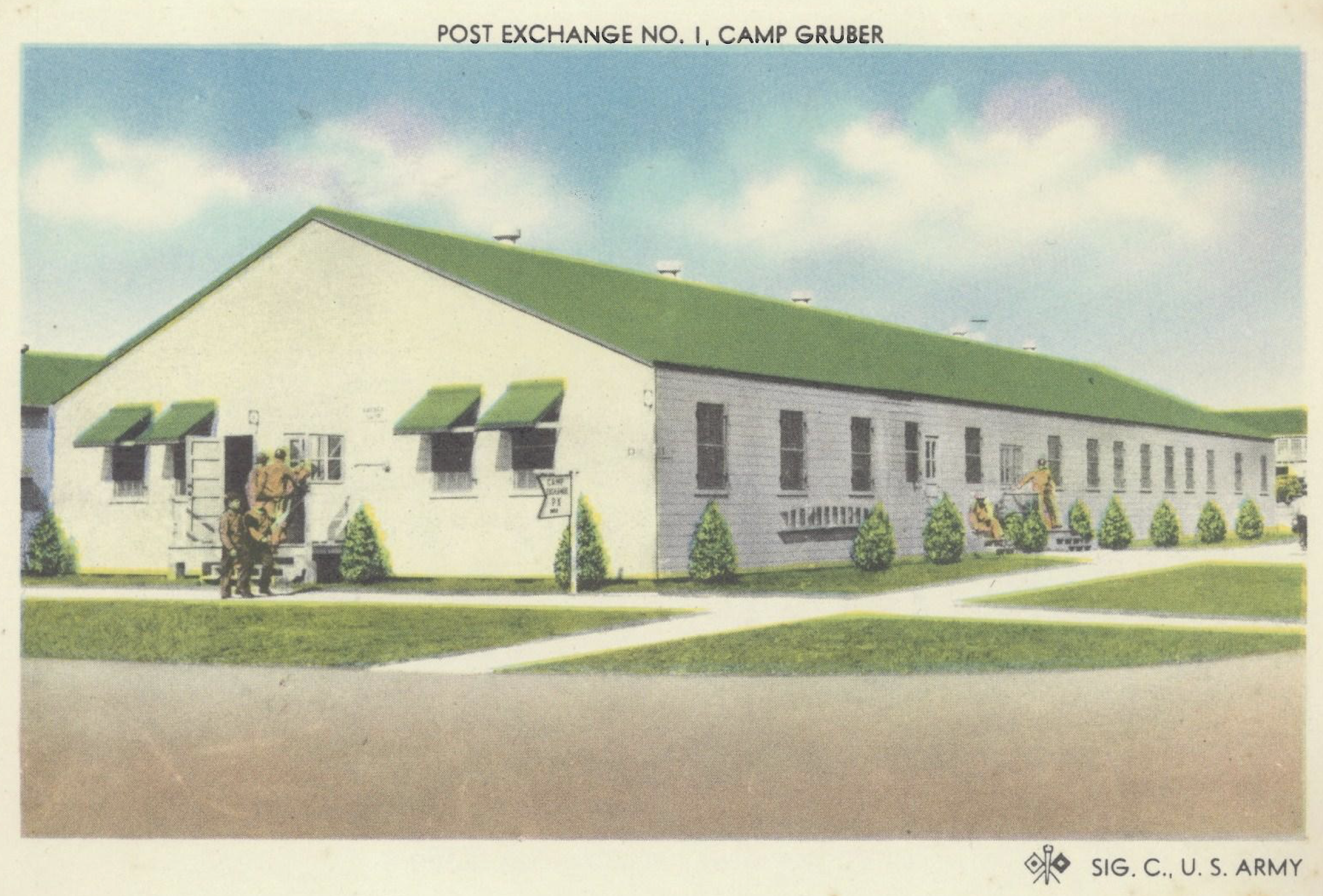
Before there was a Rainbow Division at Camp Gruber, there were people living on its ground.
On July 14, 1943, the 42nd Infantry Division was formally reactivated at Camp Gruber, Oklahoma. Men gathered beneath the colors of a division made famous during WWI, beginning the long process that would eventually carry them across the Atlantic and into the war in Europe.
A year earlier, Cherokee families had been removed from land that became part of the military installation.
I have spent years researching Camp Gruber because it is one of the places where the World War II Rainbow story begins. Before France. Before Hatten. Before Nordwind. Before Dachau.
But the deeper I go into the history of a place, the less willing I am to begin its story at the moment the Army arrives.
The Cookson Hills were not empty acreage waiting for war.
People lived there. They farmed the land, raised animals, built homes, planted crops, and buried their dead there.
Then the United States entered a global war that required an almost unimaginable mobilization of men, land, industry, and resources. Camp Gruber became part of that effort.
And the camp was needed.
Thousands of American soldiers trained there for the work ahead. Among them were the men of the 42nd Infantry Division, who would eventually fight their way through France and Germany and become part of the Allied victory in Europe.
There is no need to diminish what their training meant in order to remember what came before it.
We tend to think about wartime sacrifice through the people who wore uniforms, and rightly so. Men left their families, crossed oceans, were wounded, were killed, and carried the war home inside themselves.
But wars of this scale ask something of people far beyond the battlefield.
At Camp Gruber, part of that burden was carried by Cherokee and white families whose land became part of the military installation.
Both belong in the story.
The soldiers who trained there were preparing for something necessary and enormous. Many of them would risk everything in the fight that followed.
The people who gave up homes, land, and familiar ground were also caught inside that enormous national undertaking.
Remembering them does not diminish the soldiers.
It enlarges the history.
That is what I find myself returning to again and again in this work. History becomes thinner when we remember only the people standing at the center of the photograph.
There are always others just beyond the frame.
When I think about Camp Gruber now, I still think about the barracks, training grounds, and thousands of young men preparing to leave for war.
But I also think about what was there before them.
Erin Faith Allen is an investigative war historian and the founder of Fortitude Research, specializing in WWII archival research, wartime reconstruction, Holocaust documentation, and the recovery of women's wartime histories. She is a leading authority on the 42nd "Rainbow" Infantry Division, inluding their liberation of Dachau concentration camp. Her family-commissioned book, One Day Over the Rhine, was published in 2026.
All original photographs and written work published on this site are copyright Erin Faith Allen. Historical and archival images are used where they exist in the public domain.
```